
Orbit
A real-time multiplayer arena in the browser.
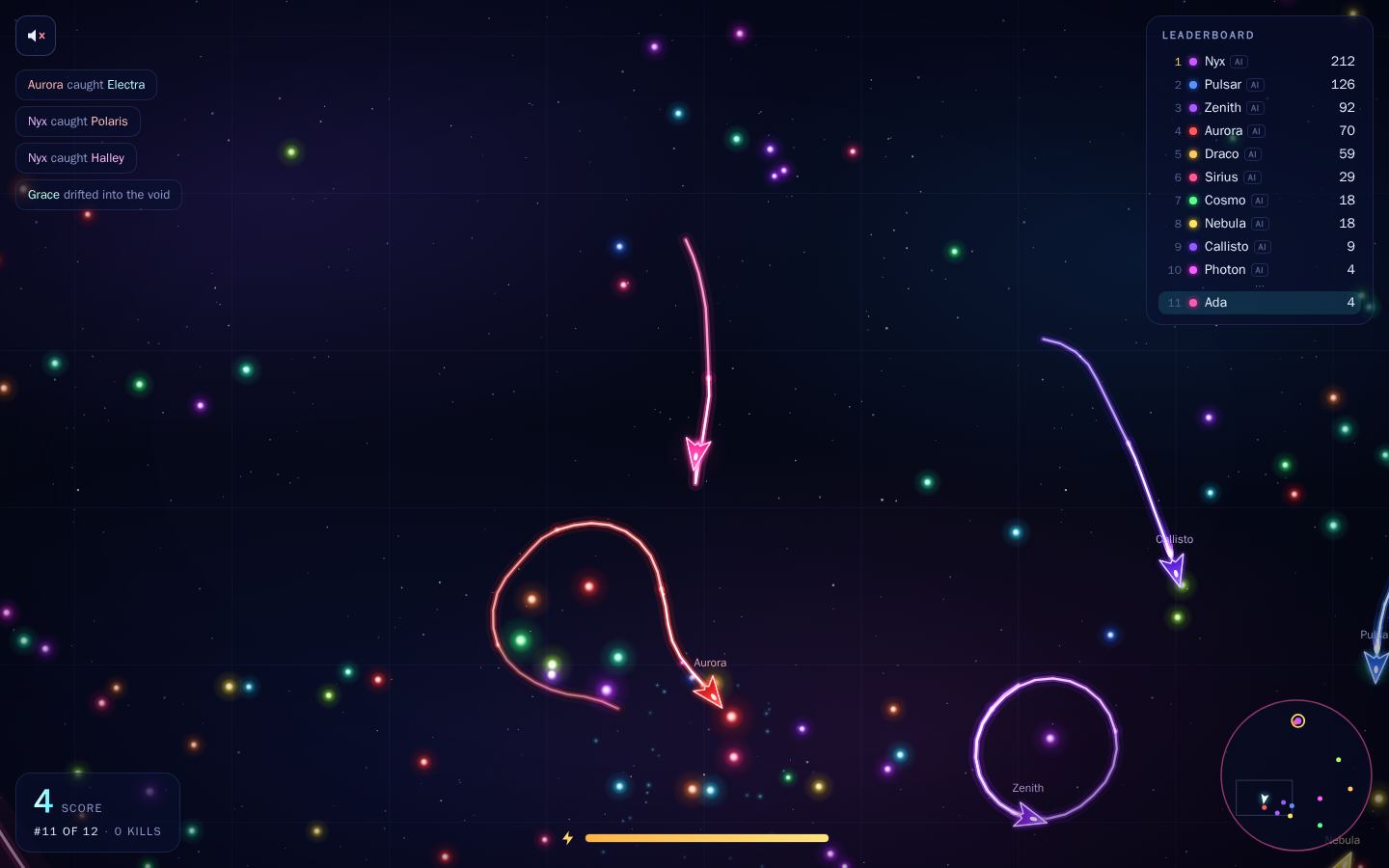
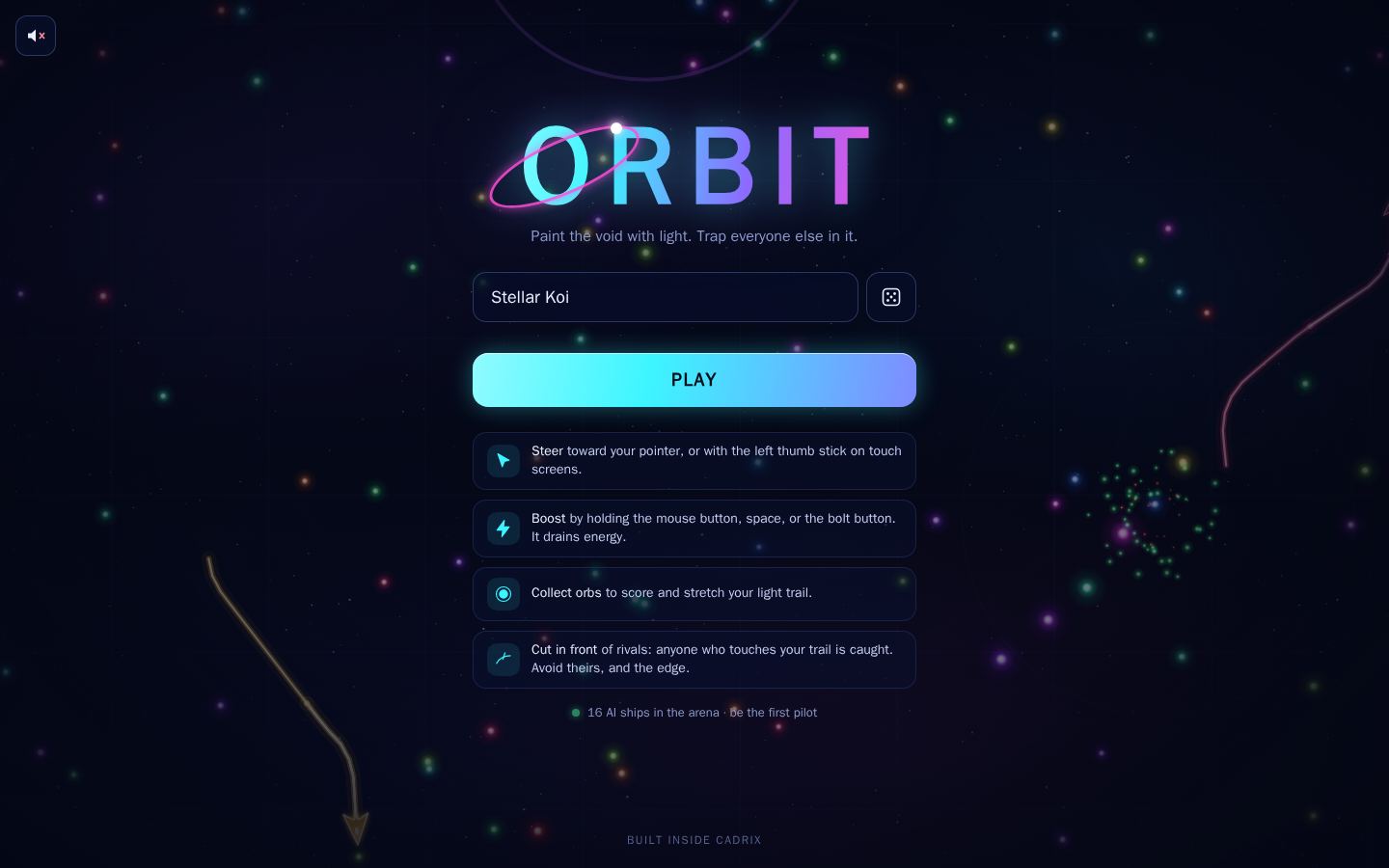
Steer a neon ship, collect orbs and trap rivals with your light trail. Open the link and you are in a live room with other players and AI ships.
Best with a friend: send them the link and you will meet in the same room.
- Build time
- 53 min
- Agents
- 1 Claude Code agent
- Tests passing
- 46
- Lines of code
- 6,757
- Runtime dependencies
- 1
Built by one Claude Code agent inside Cadrix in 53 minutes of wall-clock time, with no human edits to the code. Times come from the build log the agent kept.
What it does
- Authoritative server at 30 ticks per second with spatial hashing for collisions
- Binary snapshots at 15 Hz with only what is near you: about 180 bytes each, roughly 3 KB/s per player
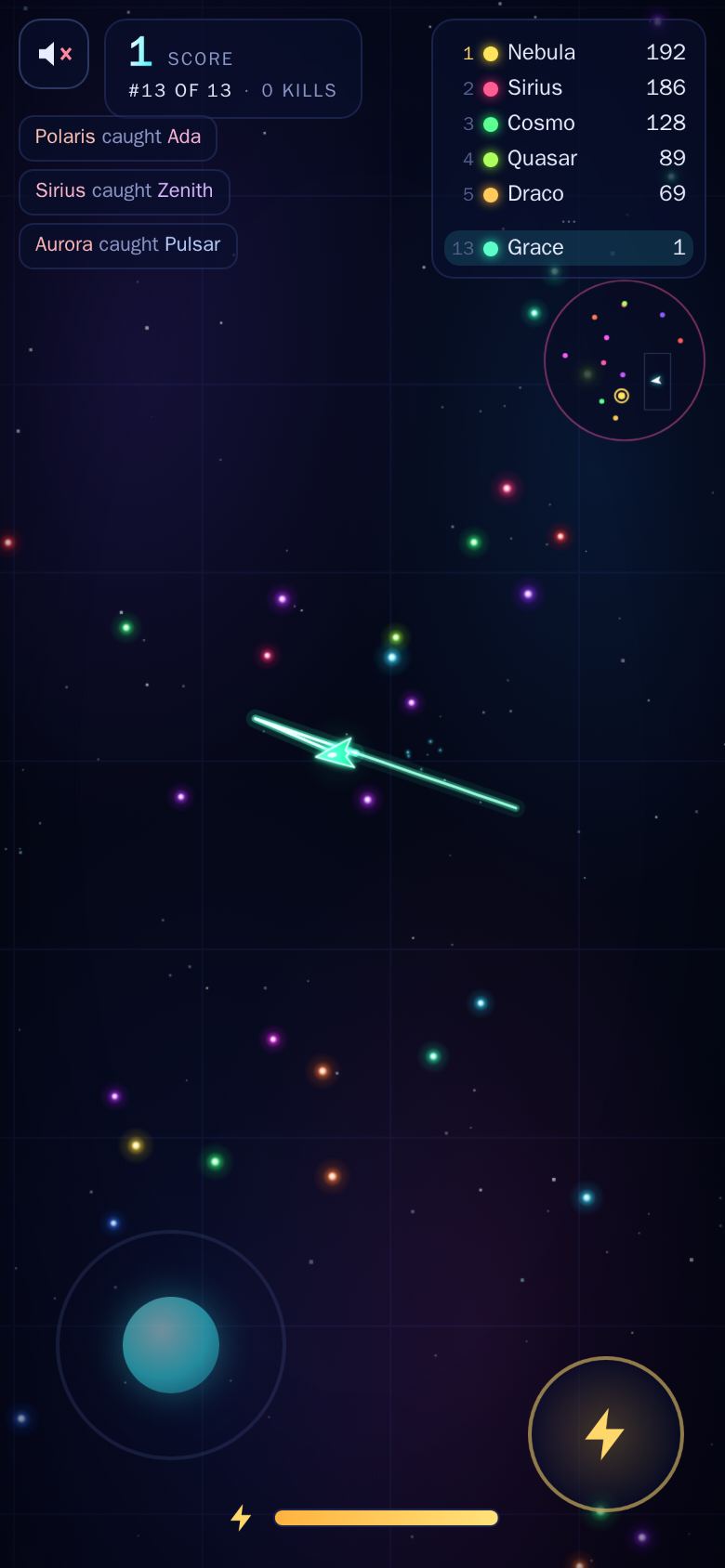
- Interpolated rivals and lightly predicted own ship, smooth on phones
- AI ships keep every room alive and step aside as people join; up to 40 people per room
- Touch joystick and boost button on phones, mouse and keyboard on desktop
- Every message validated and rate limited; floods, oversize and malformed frames are dropped
How it was built
- 0–12 minPhysics, binary protocol and the server: rooms, bots, rate limiting
- 12–15 minTests, plus a 3-minute simulation with 16 bots
- 15–27 minClient: screens, HUD, netcode with interpolation, sprite renderer, touch controls
- 27–47 minTwo-browser end-to-end runs, load test with 20 players, abuse probes, fixes
- 47–53 minREADME, final screenshots and measurements
Problems the agents solved
- A particle effect could get a negative radius and freeze the game. The agent caught it in the two-player run and made one bad frame unable to stop the loop.
- Busy areas ran out of orbs: half of the new orbs now appear near ships.
- AI ships hunted players who had just spawned: they now leave newcomers alone for 8 seconds.
Stack
Node 22WebSockets (ws)Canvas 2DTypeScriptViteVitest
More screens
Build yours the same way.
A private machine with Claude Code, Codex and Pi on one canvas.